

Go to the page content

Same Medication, Different Results:

doctors

Why One Dose Doesn’t Fit All in GLP-1 Therapy

article 2 banner

Two people. The same medication. The same dose. But completely different results.

When it comes to treatments like GLP-1 therapy, even small differences between individuals can lead to very different outcomes. That’s why medication is never a ‘one-size-fits-all’ solution.

Your body, your health needs, your response to the medication, and your lifestyle are all different.  As a result, as with most medications, your prescribed dose is personalized to ensure the best results and fewest side effects.

In your weight loss journey with GLP-1, picture yourself as a passenger on board a ship and your doctor as the captain steering you towards your destination by recommending the suitable GLP-1 medication and dose. If you change the medication or dose on your own, you risk the ship going off course.

How to Properly Start GLP-1 Therapy?

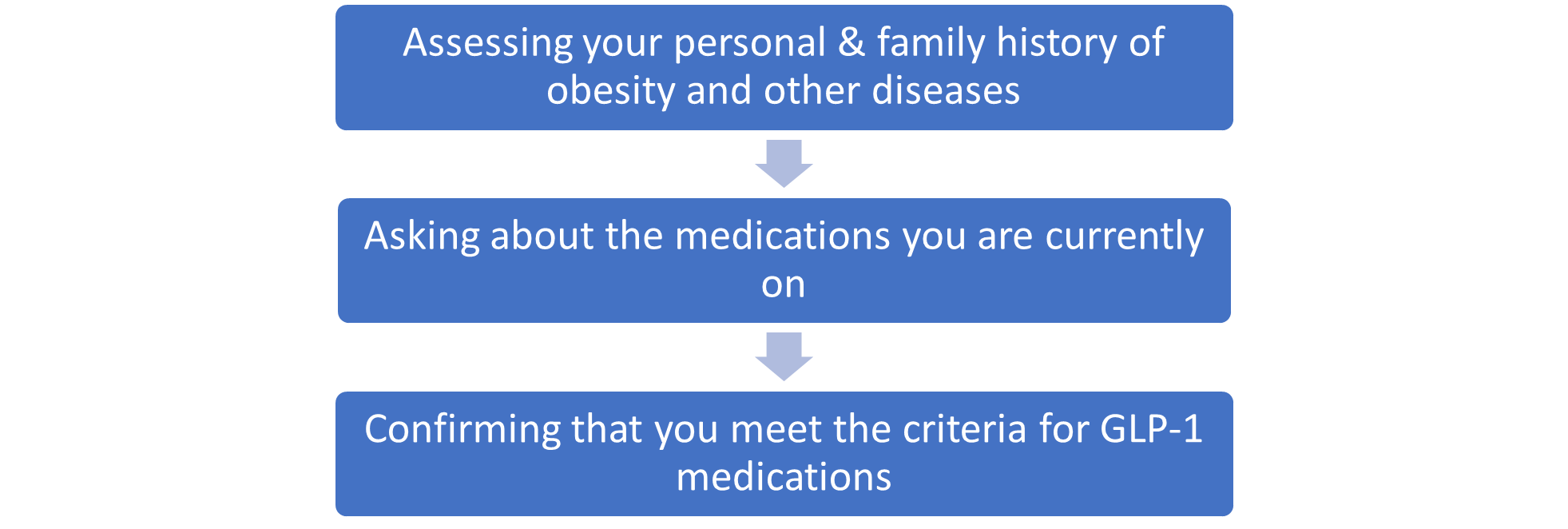
Upon embarking on your weight loss journey, your doctor will start by1

helping


You are generally considered a candidate for GLP-1 therapy if you have a:

  • Body mass index (BMI) of 30kg/m2 or higher2
  • BMI of 27kg/m2 or higher in the presence of high blood pressure, high cholesterol, type 2 diabetes, sleep apnea, or heart disease2

Your doctor may prescribe GLP-1 medications at an even lower BMI if you are at a high risk of obesity-related health problems3.

Once your eligibility is confirmed, your doctor will decide the suitable dose for your condition.

Why Should You Start “Low and Slow”?

If you had just started learning how to drive, you wouldn’t go on the highway at peak time on your first day, would you? Not only would that make you hate driving before you even start, but it would also compromise your safety. Instead, you would start learning on less busy, and less stressful, roads and work your way to busier ones.

GLP-1 therapy works similarly.

chart

GLP-1 medications mimic a natural hormone in your body that reduces appetite, increases satiety by slowing down how fast the food leaves your stomach, and lowers blood sugar4. These changes in your body explain why you have to begin with a low dose.

Even if it does not lead to noticeable weight loss, this low starting dose helps your body adapt to the medication without much discomfort. The dose is gradually increased every four weeks until reaching one that allows you to continue losing weight with the least discomfort5. Often, you will be able to consistently lose weight at a dose much lower than the maximum.

Can You Change the Dose Whenever You Want?

Noticing changes or wondering if your dose should be different? That’s a conversation to have with your doctor, not a decision to make on your own.

If you're experiencing side effects, your doctor may temporarily lower your dose.

On the other hand, your doctor will usually increase your dose if6:

  • Your weight loss has plateaued.
  • You are experiencing more hunger or can’t stop thinking about food.
  • You were temporarily placed on a lower dose to resolve side effects.

What Happens If You Increase the Dose on Your Own?

When seeking the best weight loss results, we sometimes fall under the illusion that increasing the dose means losing weight faster. However, that might not necessarily be the case, you could just be creating more discomfort. 

why your doctor must

Increasing the dose without consulting your doctor can reduce GLP-1 effectiveness and increase side effects, such as severe nausea or vomiting, diarrhea or constipation, abdominal pain, or extreme loss of appetite7.

These side effects may result in dehydration, gallbladder issues, hypoglycemia, or, in rare cases, pancreatitis7.

With such discomfort, you could start skipping doses or stop treatment altogether, which may not give you the optimum weight loss results.

doctors

Real progress in weight management doesn’t come from following someone else’s experience, it comes from following the right plan for you. GLP-1 therapy works best when each step, from the starting dose to any adjustments, is guided by your doctor based on your individual response. Trusting that process helps you achieve better results with fewer setbacks because the best outcomes come from moving forward with the right support, one step at a time.

References:


  1. Mozaffarian, Dariush, et al. "Nutritional priorities to support GLP-1 therapy for obesity: a joint Advisory from the American College of Lifestyle Medicine, the American Society for Nutrition, the Obesity Medicine Association, and The Obesity Society." The American journal of clinical nutrition 122.1 (2025): 344-367.
  2. Kumar, Rekha B, and Louis J Aronne. “Pharmacologic Treatment of Obesity.” Nih.gov, MDText.com, Inc., 20 Aug. 2024, www.ncbi.nlm.nih.gov/books/NBK279038/.
  3. Overweight and obesity management. London: National Institute for Health and Care Excellence (NICE); 2026 Jan 8. (NICE Clinical Guidelines, No. 246.) Available from: https://www.ncbi.nlm.nih.gov/books/NBK612416/
  4. Nauck, Michael A., et al. "GLP-1 receptor agonists in the treatment of type 2 diabetes–state-of-the-art." Molecular metabolism 46 (2021): 101102.
  5. Vannabouathong, Christopher, et al. "Current utilization patterns of glucagon-like peptide-1 receptor agonists." Canadian Journal of Health Technologies 2.9 (2022).
  6. Cengiz, Anıl, Calvin C. Wu, and Sean D. Lawley. "Alternative dosing regimens of GLP‐1 receptor agonists may reduce costs and maintain weight loss efficacy." Diabetes, Obesity and Metabolism 27.4 (2025): 2251-2258.
  7. Filippatos, Theodosios D., Thalia V. Panagiotopoulou, and Moses S. Elisaf. "Adverse effects of GLP-1 receptor agonists." The review of diabetic studies: RDS 11.3 (2015): 202.


GC26OB00018